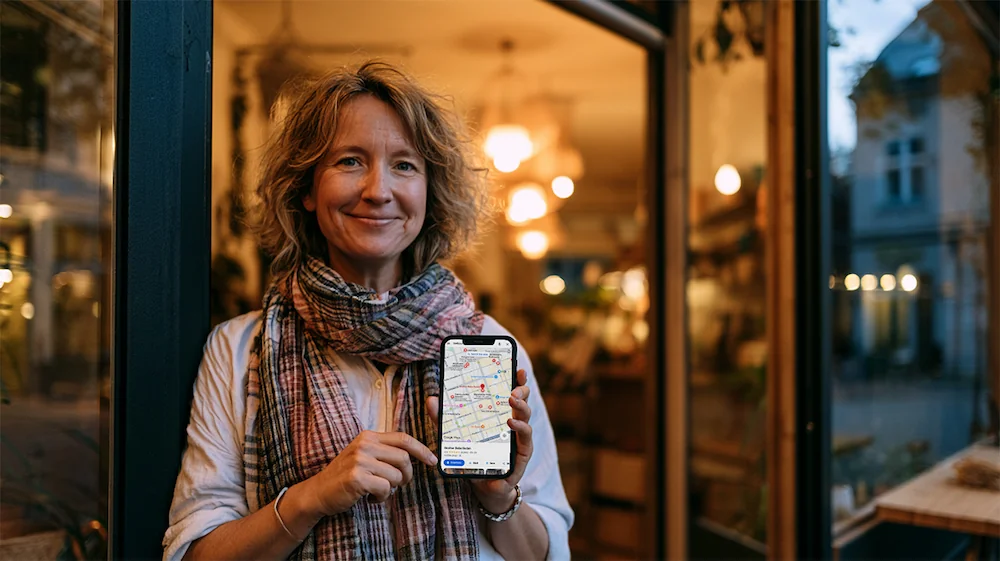
The Complete Guide to Google Business Profile
Setting up and optimising your Google Business Profile is one of the highest-ROI moves a local business can make. Here's how.
A Google Business Profile is a free listing that puts your business details straight into Google Search and Maps. Set it up properly and it's one of the best returns on effort a local Australian business can get. Here's how to claim it, fill it out, and keep it working.
TL;DR
Google Business Profile is a free listing showing your name, address, phone, hours, photos, and reviews in Google Search and Maps. The wins are picking the right primary category, keeping your name, address, and phone consistent everywhere, completing every section, adding real photos, and building a steady flow of genuine reviews. Verify the listing first, because that's what gives you full control.
What is Google Business Profile?
It's a free listing that displays your business information directly in Google's search results and on Maps. It shows your name, address, phone number, hours, photos, and reviews, with buttons for customers to call, visit your website, or get directions. For most local businesses, it's the first thing a potential customer sees.
Setting up your profile
Six steps:
- Sign in to Google Business Profile with a dedicated business account.
- Search for an existing listing for your business and claim it, rather than creating a duplicate.
- Enter your exact business name, category, and location.
- Add your contact details, including a working phone number and website.
- Set your opening hours, with adjustments for public holidays.
- Complete verification (by postcard, phone, email, or video).
Verification matters. It hands you full control of the listing and lets you respond to reviews.
Choosing the right categories
Your primary category is one of the most important ranking signals on the whole profile. Pick the specific one that matches your core business, not a broad catch-all. A cafe should choose the cafe category, not just restaurant. You can see the live example here: pick the specific category, like cafes. Add secondary categories for the other things you genuinely do.
The foundation of local SEO: NAP consistency
NAP stands for Name, Address, Phone number. Keeping it identical across every platform, your directories, website, and social profiles, helps Google trust that your business is real and where you say it is.
- Format your NAP exactly the same everywhere.
- List your business on The Local List with the same details you use on Google, character for character.
- Update every listing when something changes.
- Keep your phone and address formats consistent.
That last point is where a lot of businesses quietly lose ground: a slightly different suite number or an old mobile on one directory muddies the signal.
Completing every section
A fuller profile performs better. Fill in:
- A clear description of what you do and who you serve.
- Your products and services, with pricing where it helps.
- Specific attributes (wheelchair access, seating, payment methods).
- Accurate hours, updated for holidays.
- Booking, ordering, or enquiry links where they apply.
Photos and visual content
Listings with quality photos get more clicks, calls, and direction requests. Upload your logo, a cover image, interior and exterior shots, your team, and examples of your work or products. Adding photos regularly signals you're open and active.
Reviews: your most powerful asset
Reviews sway both your ranking and the customer's decision.
- Ask satisfied customers for reviews using a shareable link.
- Reply to all of them, thanking the good ones and addressing complaints calmly.
- Never buy reviews or offer incentives. Fake or incentivised reviews can be misleading conduct under Australian Consumer Law, and they breach Google's policies. The ACCC enforces this.
- Aim for a natural, steady flow rather than a sudden burst, which looks suspicious.
A thoughtful reply to a critical review often reassures future customers more than the complaint worries them.
Google posts and updates
Regular posts about offers, events, and news keep your profile fresh and give people a reason to engage. It's another signal that the business is alive and trading.
Understanding the insights
Google Business Profile gives you analytics: how customers found you, what searches brought them in, what actions they took, and how many asked for directions. Use it to see what's working and do more of it.
Common mistakes to avoid
- Stuffing keywords into your business name (against the rules).
- Letting hours, phone, or address go out of date.
- Creating duplicate listings for one location.
- Ignoring reviews.
- Setting it up once and never touching it again.
What this means for you
Google Business Profile is quite simply one of the best returns on effort available to a local Australian business. Accurate setup, the right category, consistent NAP, a complete profile, good photos, and genuine reviews, kept up with regular updates, put you in front of nearby customers exactly when they're searching. It's free, and most of your competitors do it half-heartedly, which is your opening.
Next step
Your profile is one piece of the puzzle. For the full playbook, here are other ways to attract local customers. And the moment you've got your Google details locked in, list your business on The Local List with the same details to reinforce your NAP consistency, with a Premium listing with an SEO backlink available if you want the extra ranking push. Want every local-marketing play in one place? Grab my local business growth ebook.
Sources
General information only. Review and advertising rules under Australian Consumer Law are enforced by the ACCC.
Found this helpful? Share it.
List your business on The Local List
Get found by local customers searching for what you offer. Adding your business is quick, free to start, and helps you stand out in your area.
Add your business